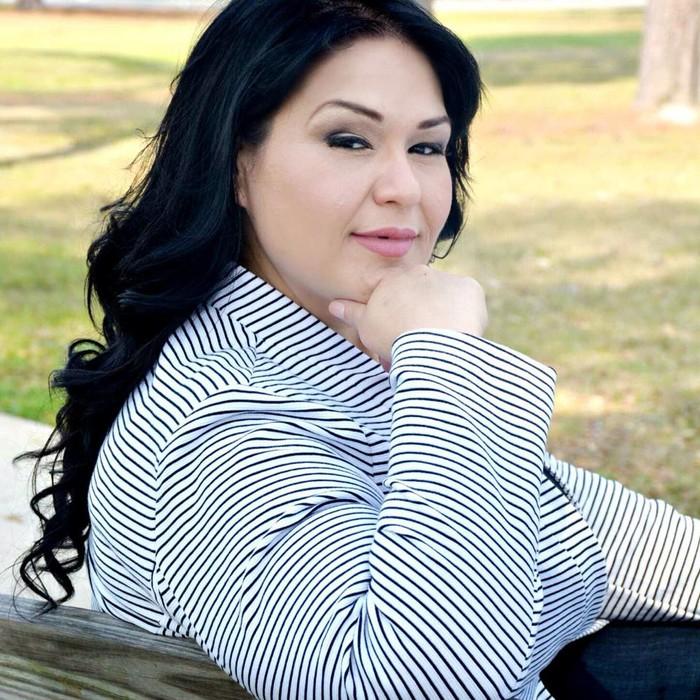


TEXAS, UNITED STATES — She was once one of the heaviest women in the world, trapped in a body that made even the simplest everyday activities nearly impossible. Then, in a shocking turn of events, she became the center of a murder investigation involving the death of her two-year-old nephew.
For years, the world knew Mayra Lizbeth Rosales through a cruel and sensational nickname: the “Half-Ton Killer.”
But behind that headline was a woman whose story was far more complicated than most people realized.
Mayra had falsely confessed to killing her nephew, attempting to protect her sister from criminal prosecution. When medical evidence exposed the truth, the charges against Mayra were dropped.
What followed was an extraordinary transformation.
With the help of medical specialists, multiple surgical procedures, and an intensive weight-management program, Mayra lost more than 800 pounds. She learned to walk again, regained independence, and spoke publicly about finding a reason to live.
For a time, her story became an international symbol of determination and second chances.
But her life came to an end much earlier than many people expected.
Mayra Lizbeth Rosales died on February 16, 2024, at just 43 years old, according to an obituary published in The Monitor, a newspaper serving South Texas.
Her death at McAllen Medical Center closed a life marked by severe health challenges, family tragedy, public scrutiny, and remarkable personal change.
The obituary did not disclose a specific medical cause of death.
The Monitor
A Life That Captured the World’s Attention
Long before millions of people learned her name, Mayra lived a life defined by serious limitations.
At her heaviest, she weighed more than 1,000 pounds.
Her mobility had deteriorated so severely that she could not stand or walk independently. She spent much of her time in bed, relying on other people for basic necessities.
Ordinary activities that most people rarely think about—getting dressed, moving through a doorway, bathing, or walking outside—had become major obstacles.
Her condition also affected her emotional well-being.
During a 2013 interview with ABC News, Mayra described how she had reached a point where she believed she was dying.
She had begun to lose hope that her circumstances could ever improve.
Her situation was not simply a matter of physical weight. It involved complex medical needs, profound isolation, and a diminishing sense of independence.
For years, her world had become increasingly small.
Yet few could have imagined that a family tragedy would soon bring her circumstances to international attention.
The Tragedy That Changed Everything in 2008
In March 2008, Mayra’s two-year-old nephew, Eliseo Gonzalez Jr., died in Texas.
The child’s death prompted a criminal investigation that would eventually expose disturbing facts about what had happened inside the family.
Initially, Mayra told investigators that she had accidentally caused the child’s death by falling or rolling onto him.
Because of her extreme weight, the explanation attracted immediate attention.
News organizations began reporting the unusual case, and Mayra’s name spread rapidly.
She was charged with murder.
At the time, authorities faced extraordinary logistical challenges because her size made transportation and detention difficult.
News reports described concerns about how she could be brought to court and whether a conventional jail could accommodate her medical needs.
The story became an international spectacle.
Photographs of Mayra circulated widely, and the public discussion frequently focused more on her body than on the evidence surrounding the child’s death.
But investigators were beginning to discover that the original explanation did not match the medical findings.
The Autopsy That Exposed a Devastating Secret
The investigation changed direction when medical evidence revealed that the little boy had suffered blunt-force injuries to his head.
Those findings contradicted the account that Mayra had accidentally crushed him.
Investigators began questioning whether the confession was truthful.
Eventually, Mayra acknowledged that she had been trying to protect her sister, Jaime Lee Rosales, the child’s mother.
In an interview with ABC News, Mayra later explained that she had already lost hope in her own future and was willing to accept responsibility for something she had not done.
Her statements revealed a deeply troubling combination of family loyalty and despair.
She had come to believe that her own life mattered so little that sacrificing her freedom seemed acceptable.
But the child’s death could not be explained away.
Mayra ultimately cooperated with the investigation, and her sister confessed.
The murder charge against Mayra was dropped.
Jaime was sentenced to 15 years in prison.
For Mayra, being cleared represented a turning point, but it did not erase the tragedy or the consequences of her false confession.
The Emotional Burden of Protecting Her Sister
Mayra’s decision to falsely confess remains one of the most disturbing aspects of the case.
She later said that she had believed she was close to death because of her health.
With so little hope for herself, she was prepared to take the blame to protect her sister.
Her reasoning demonstrated how severely her circumstances had affected her outlook on life.
She was not merely frightened by her medical condition; she had begun to see her future as almost nonexistent.
Yet the death of a child demanded accountability.
As investigators uncovered the truth, Mayra had to confront the consequences of her actions and the reality of what had happened to her nephew.
The case also changed the family’s future.
Jaime’s surviving children faced the consequences of losing their brother and having their mother incarcerated.
Mayra later spoke about those children as an important motivation for her recovery.
Instead of accepting that her own life was effectively over, she began to consider how she might help them.
That desire became part of the foundation for her transformation.
The Decision That Began Her Extraordinary Recovery
After the charges against her were dropped, Mayra began an intensive effort to improve her health.
She received treatment from Houston-based bariatric surgeon Dr. Younan Nowzaradan, widely known for his work with patients experiencing severe obesity.
Her medical team faced a complicated challenge.
At her starting weight, many ordinary treatment options involved substantial risks.
Before some procedures could be performed, Mayra needed to lose a significant amount of weight.
Her treatment therefore required a carefully supervised approach involving dietary changes, medical monitoring, and surgery.
ABC News reported in 2013 that she initially lost 100 pounds in one week while receiving intensive medical care.
That extraordinary early change occurred under specialist supervision and should not be viewed as a typical or safe weight-loss target for others.
Her treatment continued over several years.
By 2013, she reported losing more than 800 pounds.
For a woman who had once been unable to stand, the changes were life-altering.
Multiple Surgeries and the Difficult Road to Recovery
Mayra’s transformation was not the result of one simple procedure. It involved extensive medical treatment. Her care included weight-loss surgery and procedures to address excess skin and other medical problems. In a 2015 interview with ABC13 Houston, Dr. Nowzaradan said he had performed 11 surgeries on her, including a gastric band procedure and skin-removal operations. Mayra also discussed being diagnosed with lymphedema, a condition involving swelling caused by impaired lymphatic drainage. The diagnosis added another dimension to her medical challenges. Her recovery required ongoing attention to her health, nutrition, and physical abilities. The dramatic before-and-after photographs that circulated online captured the visual change, but they could not show the full extent of the work involved. Behind those images were medical appointments, rehabilitation, adjustments to daily routines, and the effort to regain abilities she had lost. Her journey was not an instant transformation. It was a prolonged process of medical treatment and adaptation.
The Moment She Learned to Walk Again
One of the most meaningful achievements in Mayra’s recovery was regaining her ability to walk. For years, she had been confined to bed. The physical limitations affected almost every aspect of her daily life. After losing a substantial amount of weight, she gradually regained mobility. Standing, walking, and moving around independently represented enormous changes. In interviews, she described the excitement of being able to do things that had previously been impossible. She also spoke about the emotional response of her sister’s surviving children when they saw her walking. For them, the transformation meant that Mayra could participate more actively in family life. For Mayra, it meant recovering a sense of independence. The changes were not merely cosmetic. They affected her ability to engage with the world. For someone who had once believed she might never leave her bed, walking through a doorway became a powerful symbol of possibility.
Her Motivation: The Children Who Needed Her
Mayra repeatedly emphasized the importance of her sister’s surviving children. Following their mother’s imprisonment, the children faced major disruptions to their family life. Mayra said she wanted to be healthy enough to help care for them. In her 2013 ABC News interview, she explained that the children motivated her to continue losing weight and rebuilding her life. She described their excitement when they saw her stand and walk. The relationship gave her a sense of purpose beyond her own recovery. Her transformation was therefore connected to a deeply personal goal: becoming more physically capable and present for children she loved. Her public statements did not establish every later detail of the family’s living arrangements, and those details should not be assumed. What is documented is that Mayra identified the children as a major reason to keep fighting for her health.
ABC News
From International Headlines to a Television Documentary
Mayra’s extraordinary circumstances attracted the attention of television producers. Her journey was documented in TLC’s Half-Ton Killer: Transformed, which aired in December 2013. The documentary followed the remarkable changes in her life after the criminal case. Viewers learned about her medical treatment, the emotional circumstances surrounding her false confession, and the difficulties of rebuilding her independence. For many audiences, the documentary changed their understanding of Mayra. The woman once portrayed through sensational headlines was now speaking openly about her struggles, regrets, and hopes for the future. The program also demonstrated the difference between public perception and personal reality. Before her recovery, Mayra was frequently described in terms of her weight and the murder accusation. Afterward, she became known for surviving extraordinary circumstances and making significant changes to her life. Her transformation generated international interest because it combined several unusual elements: a serious criminal investigation, extreme obesity, a difficult medical recovery, and the emotional consequences of family tragedy.
The Doctor Who Helped Change Her Life
Dr. Younan Nowzaradan became an important figure in Mayra’s recovery. Known to television audiences as Dr. Now, he specialized in treating patients with severe obesity and complex medical needs. His work later became widely recognized through the TLC series My 600-lb Life. Mayra’s treatment required extensive planning because of the risks associated with her initial weight and limited mobility. Her medical team had to consider not only weight reduction but also her overall health, physical functioning, and suitability for surgery. By 2015, she had undergone numerous procedures and made substantial progress. Dr. Nowzaradan described her as highly motivated. For Mayra, the treatment represented more than an opportunity to change her appearance. It offered the possibility of reclaiming activities she had been unable to enjoy for years. She was able to move more freely, participate in family life, and imagine a future beyond the confines of her bedroom.
A New Relationship With Food and Daily Life
During her recovery, Mayra spoke about changes in her relationship with food. In a 2015 television interview, she explained that she had begun viewing food primarily as nourishment rather than the center of her daily routine. The change reflected a broader shift in her outlook. For years, her physical limitations had restricted her choices and activities. As her mobility improved, she gained opportunities to spend time with loved ones, move around independently, and engage in everyday experiences. Her journey also highlighted the importance of sustained medical support. Severe obesity is a complex chronic condition influenced by multiple biological, psychological, environmental, and social factors. Mayra’s experience was highly individual and involved medical interventions that would not be appropriate for everyone. Her dramatic weight loss should therefore be understood in the context of specialist treatment rather than as a simple example of willpower. What made her story remarkable was the scale of the medical and personal challenges she faced, and the progress she was able to achieve.
Her Message to Others Facing Difficult Circumstances
As her transformation attracted international attention, Mayra began sharing encouragement with others. She understood what it meant to feel trapped by circumstances that seemed impossible to change. Her interviews reflected the contrast between her earlier hopelessness and the optimism she experienced after regaining mobility. In 2015, she encouraged people struggling with their own challenges to continue seeking help and not abandon hope. Her message resonated with viewers who had experienced isolation, illness, disability, or other obstacles. But Mayra’s story was not one of effortless success. It involved setbacks, medical risks, painful family experiences, and the ongoing demands of recovery. Her determination was significant, but so was the professional treatment that helped make her progress possible. Together, those elements formed the story that inspired many people who watched her interviews and documentary appearances.
The Complicated Family Tragedy That Never Disappeared
Even as Mayra became known for her transformation, the circumstances surrounding her nephew’s death remained an essential part of her story. Eliseo Gonzalez Jr. was only two years old when he died. His death was the central tragedy from which the investigation and its consequences unfolded. The discovery that Mayra had falsely confessed did not undo the loss of the child. Nor did her eventual recovery erase the damage caused by the events of 2008. Her sister’s conviction and imprisonment changed the lives of multiple family members. The surviving children faced a future shaped by grief and separation. Mayra’s desire to help care for them was an important part of her motivation, but it existed alongside a tragedy that could never be reversed. Remembering her life responsibly means acknowledging both the extraordinary progress she made and the young life lost in the case that first brought her international attention.
What Happened to Mayra After Her Television Fame?
Mayra’s most widely documented public appearances occurred during the years following her criminal case, particularly between 2013 and 2015. During that period, she spoke openly about her medical progress and hopes for the future. Her weight-loss photographs continued circulating online, often appearing in articles about dramatic physical transformations. However, detailed, independently verified reporting about her later private life is limited. Some subsequent online accounts have made claims about her health and weight after the initial transformation. Those claims should not be treated as established facts without reliable medical documentation or confirmation from people directly involved. It is also important not to assume that a person who has undergone major weight-loss treatment will experience an uninterrupted recovery. Long-term health outcomes vary, and significant weight changes can require continuing medical management. Mayra’s public story demonstrates the remarkable progress she achieved during the documented period, but it does not provide a complete medical record of the years that followed.
The Sad News of Her Death at Just 43
On February 22, 2024, The Monitor published an obituary announcing that Mayra Lizbeth Rosales had died on Friday, February 16. She was 43 years old. The obituary identified McAllen Medical Center as the location of her death and listed Lord and I Funeral Home of Peñitas as responsible for arrangements. For those familiar with her extraordinary story, the announcement marked a sad ending to a life that had attracted international attention. Mayra had once spoken publicly about believing she was dying. She later experienced a dramatic recovery and celebrated her renewed independence. Yet her life ultimately ended at an age when many people are still planning decades of future experiences. The news was particularly poignant because her earlier transformation had become associated with survival and the possibility of a second chance. Her death did not diminish those achievements. It did, however, bring renewed attention to the complex medical and personal challenges that had shaped her life.
The Monitor
What Was Mayra Lizbeth Rosales’ Cause of Death?
This is one of the most important questions surrounding her final chapter. The obituary confirms her date, age, and place of death. However, it does not specify the medical condition or event responsible for her passing. Because Mayra had previously experienced severe obesity and undergone multiple surgeries, some readers may assume that those circumstances directly caused her death. That conclusion cannot be established from the available obituary or the historical reporting reviewed. A person’s past medical history does not, by itself, prove the cause of a later death. Without a reliable medical disclosure, death certificate, or confirmed statement from an authorized source, it would be inappropriate to identify a particular disease or complication as the cause. Her death is confirmed. A specific cause of death has not been verified.
Why Her Story Still Matters
Mayra Rosales became famous under circumstances that few people could have imagined. Her case involved a false confession, a child’s death, a complex criminal investigation, and extraordinary medical challenges. But her story also raised important questions about how society treats people with severe obesity. During the early coverage of her criminal case, much of the public attention centered on her physical appearance. Her weight became a spectacle, sometimes overshadowing the facts of the investigation. When she began losing weight, the coverage shifted toward her transformation. Both phases of attention demonstrated how easily a person’s life can be reduced to a dramatic headline. Yet Mayra’s experiences involved much more than her body. She was a family member, a woman confronting the consequences of a false confession, and a patient navigating serious medical challenges. Her life reminds us that sensational stories often conceal complicated human realities.
A Legacy of Recovery, Responsibility, and Second Chances
Mayra’s legacy is not simple. Her false confession was a serious act that complicated an investigation into the death of a child. Her decision to cooperate with investigators helped expose what had happened. Her later medical recovery demonstrated the possibility of meaningful improvement even after years of severe physical limitation. Her interviews also revealed the importance of personal relationships in motivating her treatment. For some viewers, she represented hope after years of despair. For others, her story raised difficult questions about family loyalty, responsibility, and the consequences of protecting someone who has caused harm. Both aspects are necessary to understand her life. Mayra was neither merely a sensational criminal headline nor simply a dramatic before-and-after photograph. She was a person whose life included painful mistakes, difficult circumstances, meaningful achievements, and an early death.
Final Thoughts: Remembering Mayra Lizbeth Rosales
Mayra Lizbeth Rosales lived only 43 years, but her life attracted attention far beyond her home in Texas. At one point, she weighed more than 1,000 pounds and had almost completely lost her independence. In 2008, she became involved in a murder investigation after falsely confessing to the death of her nephew. When the evidence exposed the truth, the charges against her were dropped, and her sister was held accountable. Mayra subsequently began an extraordinary medical journey, losing more than 800 pounds and regaining her ability to walk. Her transformation became the subject of television documentaries and international news coverage. For a time, she was a powerful example of what intensive treatment, determination, and renewed purpose could accomplish. On February 16, 2024, she died at McAllen Medical Center in Texas. Her specific medical cause of death has not been publicly established in the reliable sources reviewed. Her life remains a story of tragedy and transformation, reminding audiences that behind even the most extraordinary headlines is a human being whose experiences deserve to be understood with care.